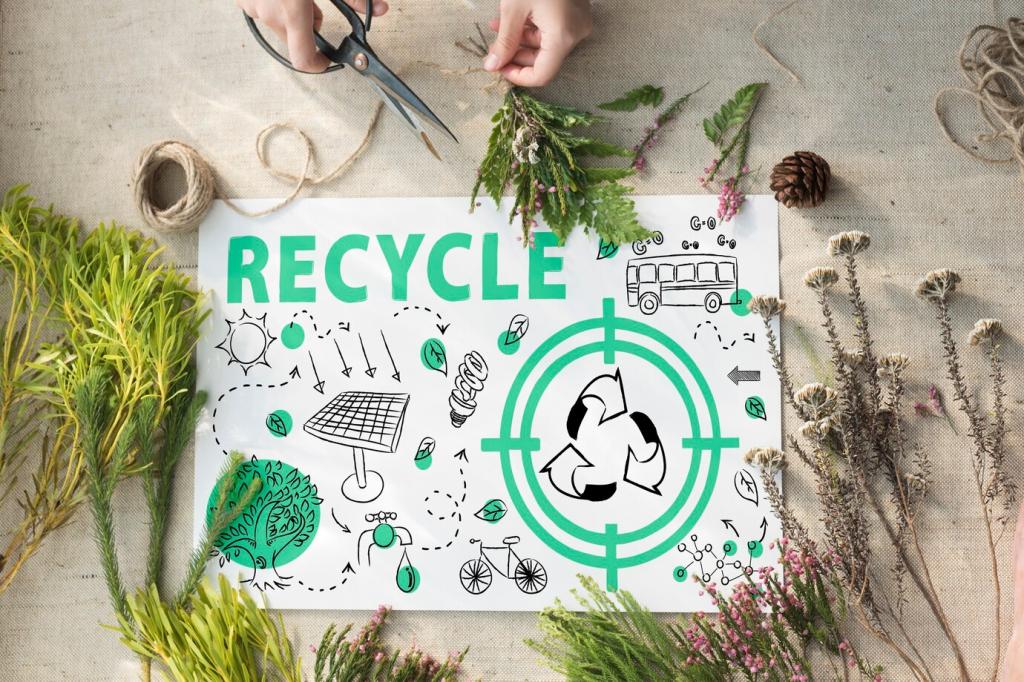
Chosen theme: Copywriting Techniques for Eco-Friendly Campaigns. Welcome to a practical, inspiring space where message clarity meets environmental integrity. Explore honest storytelling, behavioral nudges, and channel-specific tactics that help people choose greener actions. Share your questions and subscribe to keep these sustainable copy tips coming.

Know Your Eco-Conscious Audience

Values-Based Segmentation

Group readers by the values that drive their eco choices: health, savings, community pride, or climate impact. Then mirror those priorities in headlines and leads. Ask yourself which value unlocked their last green decision and write directly to that motivation.

Empathy Mapping for Green Decisions

Map what your audience sees, feels, and fears during a sustainable purchase. Are they worried about greenwashing or product performance? Use their language, not yours, to reduce uncertainty. Invite readers to share a concern you can address in your next post.

Voice and Tone Alignment

Match tone to readiness. Skeptical readers need calm, evidence-led clarity; committed advocates crave momentum and community. Keep sentences human, specific, and transparent. If your tone feels preachy, rewrite it as a helpful neighbor offering a practical, kind nudge.

Build Credibility and Avoid Greenwashing

Replace vague claims with measurable details readers can check. Instead of “eco-friendly,” specify recycled-content percentages, energy savings, or packaging reductions. Link to proof pages and clarify measurement methods. Clear details beat lofty promises every single time.

Build Credibility and Avoid Greenwashing

Name credible certifications and explain what they cover in plain language. Provide context, not just badges. If a product reduces emissions in use but not manufacturing, say so. Readers reward honesty, and transparency strengthens long-term brand loyalty.

Tell Sustainability Stories That Stick

Explain the problem that sparked your eco mission and the specific insight that changed your approach. Keep it personal and concrete. A founder hauling plastic from a local creek is more memorable than a generic commitment statement on a corporate page.
Feature real people using your solution in real contexts. Quantify the change, however small, and tie it to emotions: relief, pride, or belonging. Invite readers to submit their own eco wins to be highlighted in an upcoming community spotlight post.
Use sensory language to make sustainability tangible: the feel of sturdy refillable glass, the quiet click of an off switch, the lightness of a smaller bin. Vivid moments move readers from abstract agreement to concrete action.

Design CTAs and Nudges for Real Action

Start with small, low-risk actions: “Try one refill,” “Switch one bulb,” or “Calculate your impact.” Each success builds identity and trust. Celebrate quick wins in your copy so readers feel progress immediately and want to keep going.

Channel-Specific Copy: Email, Landing Pages, Social

Lead with a concrete benefit and a hint of impact: “Cut kitchen waste by 30% with one swap.” Keep it honest, skimmable, and curiosity-safe. Inside, front-load value and invite a small action that feels easy to complete.

Channel-Specific Copy: Email, Landing Pages, Social

Put the core promise, proof, and primary CTA above the fold. Use comparison blocks, certifications, and candid FAQs to dissolve hesitation. Finish with a concise summary and a CTA that repeats the specific outcome readers care about most.

Intent-Driven Keyword Research

Map queries to stages: learning, comparing, and deciding. For each, craft content that genuinely helps. Avoid stuffing; write naturally and answer the full question. Strong metadata and descriptive headings make your eco value easy to find and trust.

Structured Data, FAQs, and Helpful Snippets

Mark up product specs, certifications, and how-to steps so search engines understand your proof. Clear FAQs reduce bounce and build credibility. Aim to earn featured snippets by offering concise, complete answers paired with deeper, actionable guidance.

Evergreen Glossaries and Guides

Publish plain-language definitions for sustainability terms your readers see often. Link to examples, calculators, and checklists. Evergreen assets compound over time, attracting curious readers who are primed for responsible, well-explained solutions.

Measure, Test, and Iterate Responsibly

Define Success the Right Way

Choose metrics that reflect real impact, not just clicks: completed refills, repaired items, or take-back enrollments. Align your copy experiments with these outcomes and report results in plain language your audience can understand and trust.

Run Fair, Respectful Experiments

Test variations that differ on clarity, proof, and usability—not manipulative tactics. Keep data private and disclosures clear. Ethical testing strengthens brand integrity, building a community that reads, shares, and returns without hesitation.

Close the Loop with Learning

Document what worked, for whom, and why. Turn insights into guidelines your whole team can use. Invite reader feedback, then incorporate it visibly. Iteration fueled by community trust is the most renewable resource your copy can harness.
Gsmutual
Privacy Overview

This website uses cookies so that we can provide you with the best user experience possible. Cookie information is stored in your browser and performs functions such as recognising you when you return to our website and helping our team to understand which sections of the website you find most interesting and useful.