Chosen theme: Eco-Conscious Copywriting Strategies. Welcome to a space where persuasive words meet planet-first principles. Learn how to craft ethical messages, spark measurable change, and grow trust. Join our community, share your challenges, and subscribe for weekly tactics that keep integrity front and center.
Anchor your tone in verifiable facts, not vague claims. Replace “planet-friendly” fluff with specifics like recycled content percentages, refill rates, or lifecycle impacts. Readers recognize honesty instantly, and authentic detail transforms curiosity into long-term advocacy and repeat engagement.
Group keywords by intent: learning, comparing, purchasing, or maintaining. Pair “what is lifecycle assessment” with explainers, while “best refillable detergent” gets checklists and comparisons. Encourage readers to suggest topics they never find explained clearly, and build those missing pieces.
Replace manipulative urgency with meaningful context: “Choose consolidated shipping to cut emissions by 35%.” Offer plain-English benefits and honest trade-offs like slightly slower delivery. Invite feedback on which messages feel empowering rather than pushy, and adapt your CTA library accordingly.
Email and Lifecycle Messaging
Use a three-part welcome: mission clarity, practical how-to, impact calculator. Replace discounts with value—care instructions, refill reminders, and repair tips. Ask new subscribers what they want to master in month one, then tailor lessons that make sustainable choices feel easy.
Proving Impact, Building Trust
Show the Baseline and the Path
Impact without a baseline is a slogan. Publish where you started, what changed, and what remains. Use simple visuals and plain language. Invite readers to subscribe for quarterly progress summaries, celebrating the small wins while keeping the tough goals in view.
Explain standards in human terms. Why this certification? What does it cover, and what doesn’t it? Link to audits and renewal dates. Ask readers which labels they trust or question, then prioritize educational posts that demystify the complex alphabet soup.
Create a public dashboard tracking material metrics: emissions per order, return rates, recycled content, and energy sources. Add narrative context for anomalies. Invite readers to request a metric they want monitored, making accountability a collaborative, evolving practice.
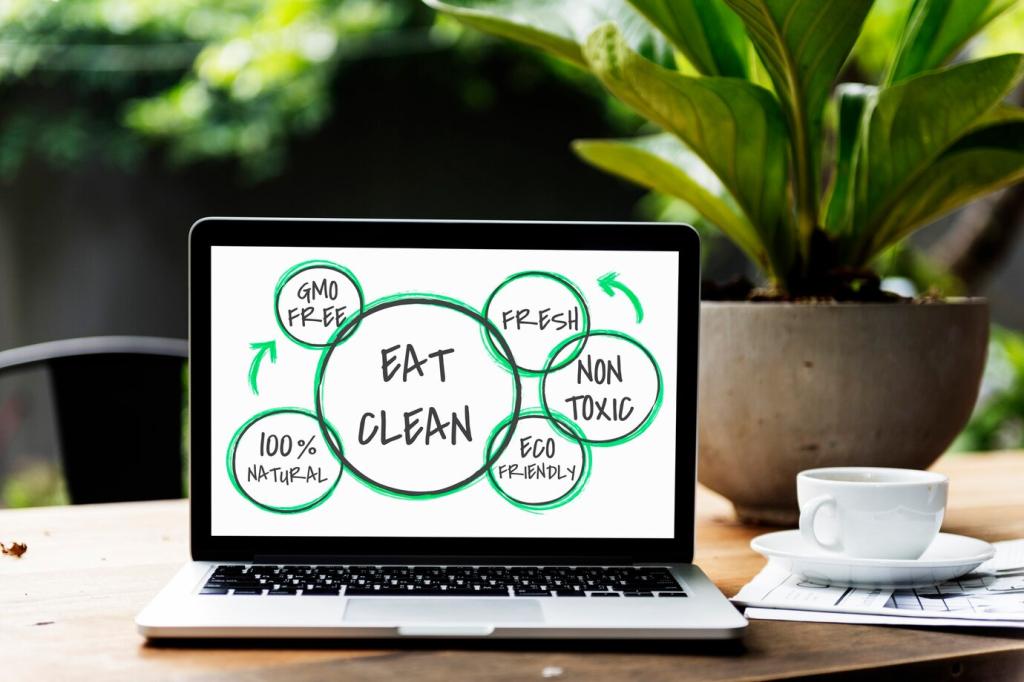
Ban vague claims like “eco” and “non-toxic” unless defined and verified. Prefer concrete descriptions—ingredients, sourcing, end-of-life paths. Encourage your team to submit questionable phrases, and we’ll compile a shared glossary your subscribers can reference and improve together.
Style and Tone Guide for Green Messages
Avoid moralizing. Center accessibility, affordability, and cultural contexts. Offer alternatives for different budgets and infrastructure realities. Ask readers to share regional constraints and solutions, then highlight their stories to broaden empathy and make your copy genuinely inclusive.
Style and Tone Guide for Green Messages
Use readable typography, alt text, and compressed media to reduce barriers and energy usage. Prefer captions and stills over heavy autoplay videos. Invite subscribers to test a low-bandwidth version of your site and report where the experience can improve.
Write cornerstone guides, then repurpose into newsletters, social threads, and lightweight infographics. Keep stats and quotes in a shared repository. Ask readers which format helps them act faster, and double down on those formats to reduce wasteful production cycles.
Set page-weight targets and monitor emissions per page view using recognized estimators. Compress images, lazy-load assets, and remove decorative bloat. Share your before-and-after results, inspiring subscribers to adopt performance budgets in their own content ecosystems.
Choose vector illustrations, optimized images, and short, captioned clips over heavy animations. Offer downloadable text versions for offline reading. Ask readers to vote on templates they want next—a playbook, a checklist, or a case study—so creation stays meaningful and lean.